
Blog · Buying Guide
Custom Embroidered Patches Manufacturer: What to Look For
Learn what to look for when choosing a custom embroidered patches manufacturer — from stitch quality and thread color matching to backing options and production reliability.
Published July 20, 2026
Introduction
Choosing the right custom embroidered patches manufacturer is one of the most impactful decisions for your branding project. Embroidered patches carry your logo, your colors, and your brand identity — and the quality of that representation depends entirely on the manufacturer you choose.
This guide covers the essential factors to evaluate when selecting a custom patches manufacturer specializing in embroidered patch production.
1. Stitch Quality and Detail Reproduction
Embroidery quality is measured by the precision, consistency, and durability of the stitching.
What to evaluate:
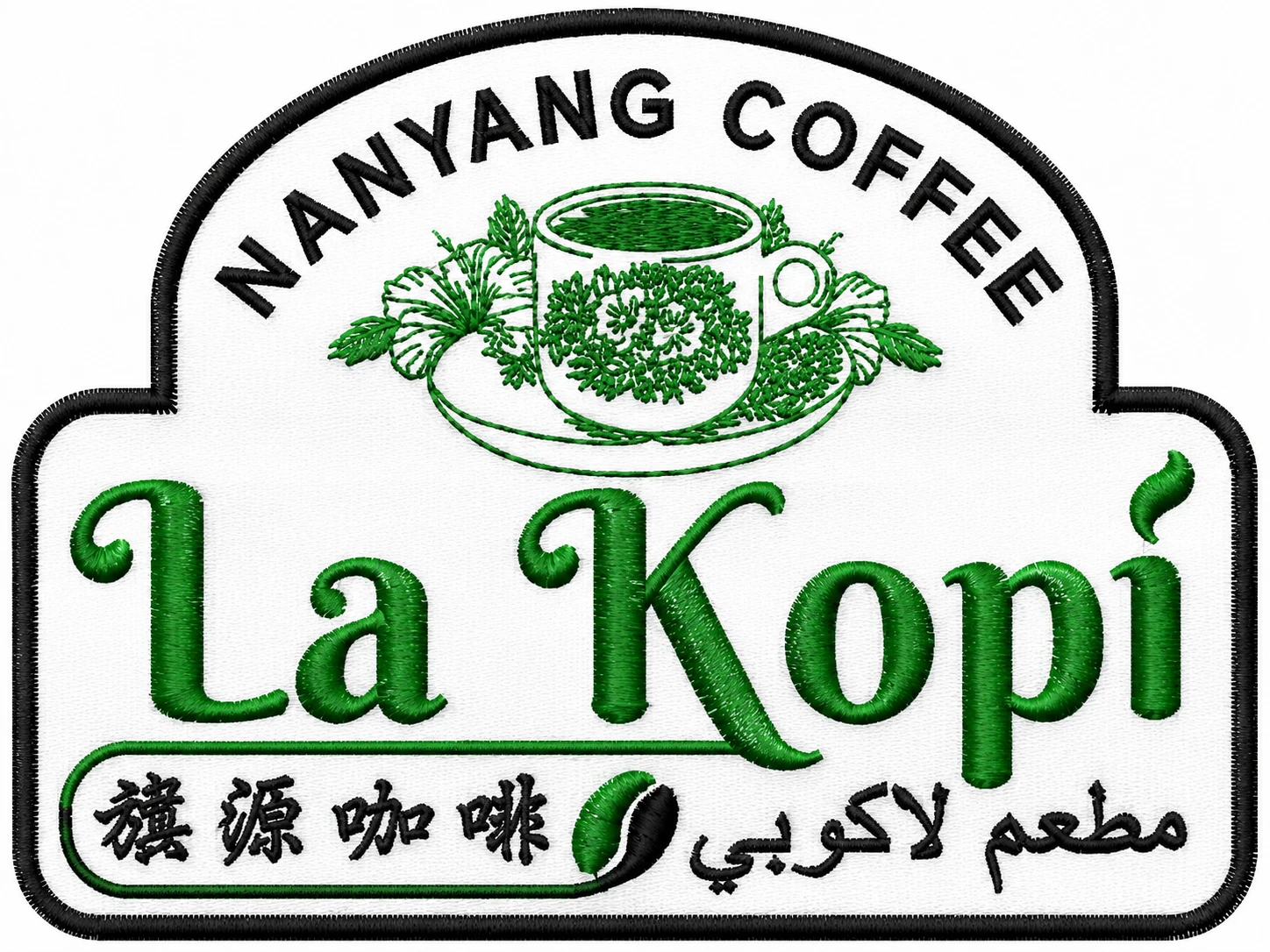
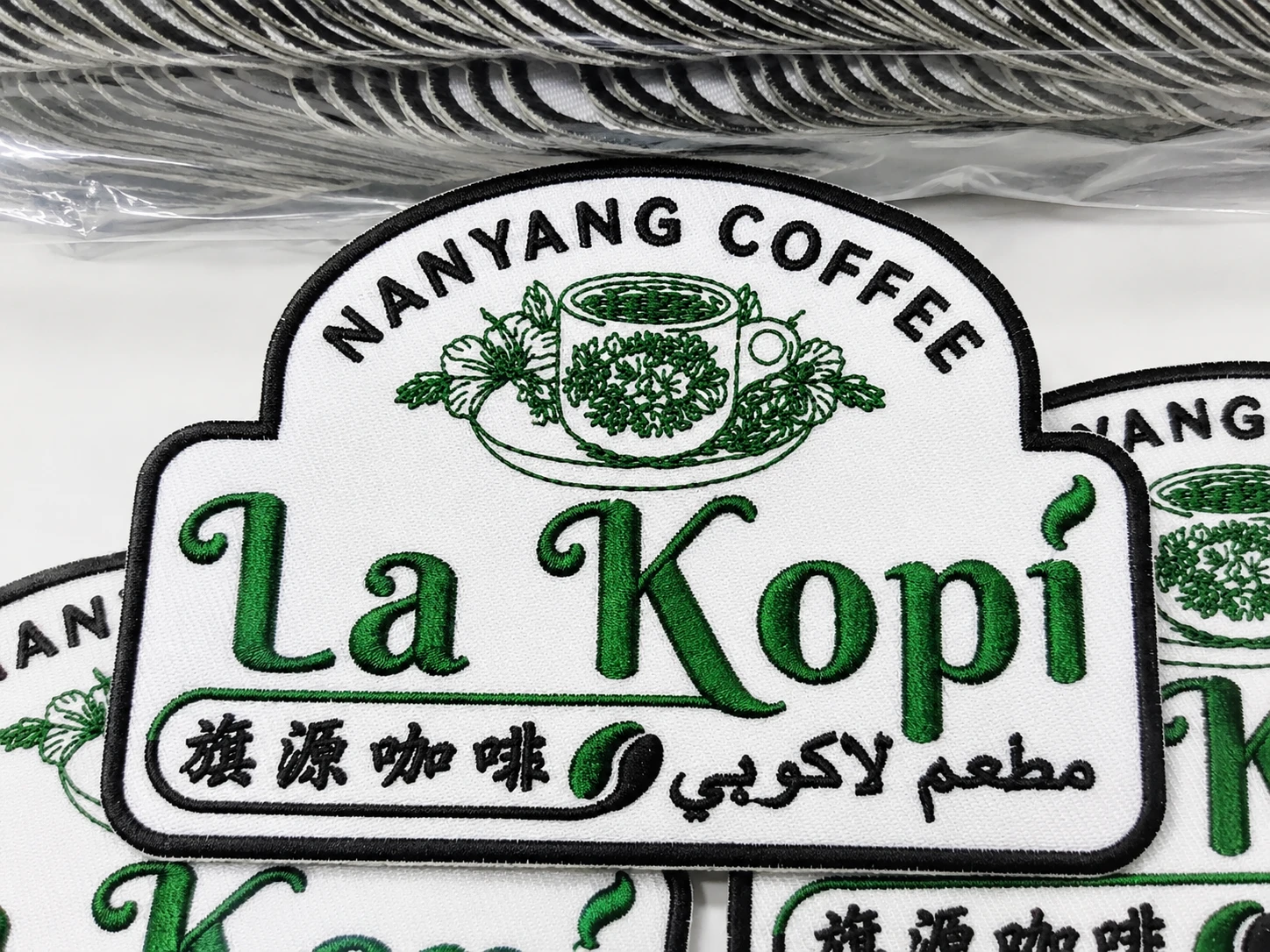
- Stitch density — higher stitch count provides fuller coverage and richer texture; lower density leaves visible gaps in the twill background
- Thread tension — consistent tension prevents loose loops, puckering, or thread breaks
- Edge finishing — clean borders without frayed threads or uneven edges
- Small text clarity — text under 5mm may blur; a good manufacturer will advise on minimum sizing
- Design detail retention — complex logos with thin lines require skilled digitizing and accurate machine execution
2. Thread Color Matching and Material Quality
Color accuracy is critical for brand consistency. A professional custom embroidered patches manufacturer should offer:
- PMS color matching — the ability to match your specific brand colors using Pantone thread references
- Thread quality — polyester and rayon threads each have different sheen, durability, and color-fastness characteristics
- Twill backing quality — the fabric base should be durable, clean, and appropriate for your application
Color evaluation checklist:
- Request a thread color chart or digital color proof before production
- Verify color consistency across previous client samples
- Confirm that colors remain accurate across different production batches
3. Backing and Border Options
Embroidered patches require the right combination of backing and border for their intended application.
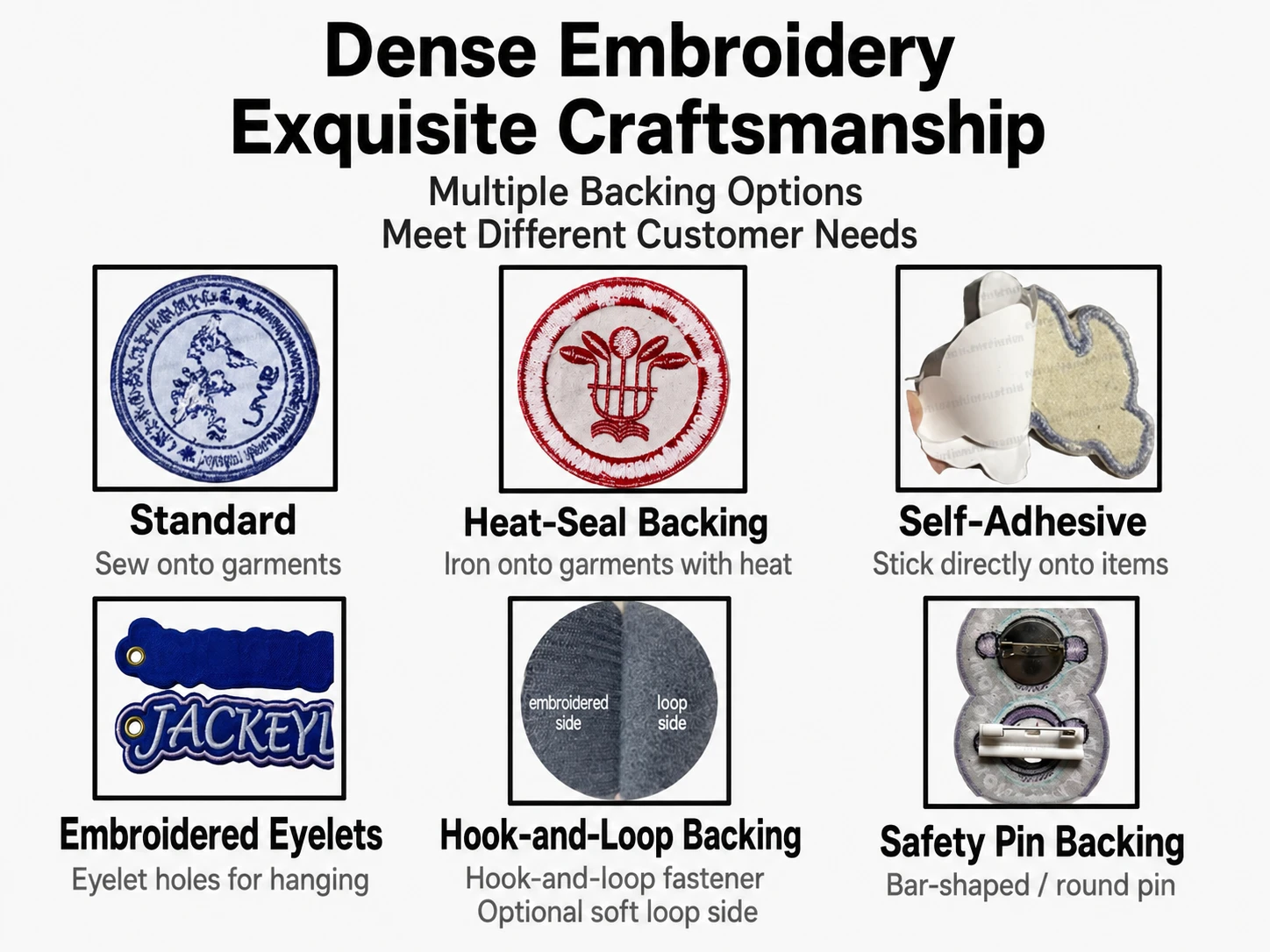
Backing options a quality manufacturer should offer:
- Sew-on backing — the most durable, recommended for uniforms, jackets, and caps
- Iron-on backing — convenient heat application for fabric products
- Velcro backing — removable for tactical gear and interchangeable branding
- Adhesive backing — temporary use for events and promotional items
Border options:
- Merrowed border — classic raised edge, standard for round and oval patches
- Heat-cut border — clean edge for custom shapes and irregular outlines
- Laser-cut border — precision finishing for detailed designs
4. Artwork Review and Digitizing
Before embroidery begins, your artwork must be converted into a stitch file through a process called digitizing. This step directly affects the final patch quality.
Good artwork support includes:
- Reviewing your design for embroidery suitability
- Suggesting adjustments for small text, thin lines, or color transitions
- Providing a digital proof showing the digitized stitch layout
- Confirming thread colors before production
A manufacturer that skips or rushes the digitizing step increases the risk of production errors. Preparing your artwork properly before submission helps streamline this process.
5. Production Capacity and Lead Time
For B2B buyers, production reliability is as important as quality.
Key production questions:
| Question | What to Look For |
|---|---|
| What is your standard lead time? | 2–3 weeks is typical for custom embroidered patches |
| Can you handle rush orders? | Some manufacturers offer expedited production |
| What is your MOQ? | 200 pieces per design is standard for B2B |
| Do you provide samples? | Pre-production samples should be available |
| How do you handle repeat orders? | Specifications should remain on file |
For growing brands, a manufacturer that supports both small batch orders and larger production runs provides the flexibility to scale.
6. Quality Control Process
A reliable manufacturer should have a documented quality control process.
Quality control checkpoints:
- Thread color verification before production starts
- In-process inspection during embroidery
- Border finishing check after cutting
- Backing adhesion verification
- Final visual inspection before packaging
A manufacturer should be willing to describe their quality control process when asked. If they cannot explain how they maintain consistency, consider it a warning sign.
7. Communication and Customer Support
Factory-direct communication is one of the biggest advantages of working with the right custom patches manufacturer.
Communication benchmarks:
- Initial inquiry response within 1 business day
- Clear, detailed quote with itemized pricing
- Proactive updates on production status
- Willingness to answer technical questions about materials, backing, or digitizing
FAQ
What should I look for in an embroidered patch manufacturer?
Evaluate stitch quality, thread color matching accuracy, backing and border options, artwork digitizing capability, production lead time, quality control process, and communication responsiveness. A good manufacturer should be able to provide samples and walk you through their production workflow.
How can I tell if embroidered patch quality is good?
Look for consistent stitch density with no gaps in the twill, clean border finishing, accurate thread colors matching your specifications, and clear reproduction of your design details including small text if applicable.
What is the standard MOQ for custom embroidered patches?
200 pieces per design is the standard minimum order quantity for B2B custom embroidered patch production. Some manufacturers may offer lower minimums for sampling or trial orders.
Can I get a sample before committing to a full order?
Yes. A reliable manufacturer should offer pre-production samples. This allows you to verify stitch quality, thread colors, backing, and border finishing before your full production run begins.
How long does custom embroidered patch production take?
Standard production lead time is 2–3 weeks from artwork approval. Rush production may be available — confirm availability and any additional costs when requesting your quote.
Find Your Custom Embroidered Patches Manufacturer
Upload your artwork or design concept and tell us your requirements. KaKa Patches will review your design and prepare a factory-direct quote.
Request a Quote → or browse our embroidered patch products →
Need Custom Patches for Your Project?
Upload your artwork and tell us your requirements. Our team will prepare a factory-direct quote.